Monthly Archives: November 2019
Why Do You get Pushback Behavior from Your Child?

What causes your child give pushback when you ask something of them? Children of all ages with different brain wiring (ADHD, NVLD, social-emotional difficulties, often struggle with problem solving and changes. Does your child ‘dig in his heels’ to resist new changes? Poor executive functioning skills cause difficulties understanding and comprehending new incoming information.
For these kids, unexpected changes often cause resistance and can lead to meltdowns. Looking at something from a different point of view, coming up with new solutions to cope with novel situations, and taking feedback from others are part of problem-solving. Getting stuck on one way of doing something can look like stubbornness and defiance when it’s really about the inability to cope with the unexpected ‘curve balls’ of daily life. Calvin, one of my students only wanted to eat Lucky Charms for breakfast, but when his mom (one of my parents coaching clients) attempted to switch to a healthier brand it was if his entire world fell apart.
 He kept saying over and over again, ‘I want Lucky Charms!’ It’s important to note here Calvin doesn’t have any sensory issues related to food. For the average person this seems quite unreasonable and willful. When encountering ‘pushback’ from your child, as hard as it is, it’s really important to stay in control of your emotions.
Despite the intensity of ‘pushback’ it’s important to remain empathetic and reinforce that you know how difficult this can be for your child. Ideally changes need to be prepared for in advance before the change actually happens. For instance, when Calvin’s mom introduced the new cereal by having him try a small portion, dry from the box this helped him to eventually make the change.
Building on strengths is another helpful tactic. Calvin and his mom used a special timer that he used to help him prepare for transitions. When his mom set the timer (giving him a visual cue) to let him know in 15 minutes, he would be trying the new cereal, he was better able to self-regulate his emotions.
Cognitive Inflexibility, Rigid Thinking and Executive Function
Pushback is Not Always a Behavior Problem however, these strategies are good, but they are not enough to actually make changes in the cognitive processing skills system. Efficient cognitive processing skills (foundational skills of executive functioning) enable one to not only manage and adjust to changes, but are necessary for fast and frustration free learning. See what parents are saying of how their children have been helped here.
I’ve Struggled with ADHD too!
I know firsthand what’s it’s like to struggle with ADHD. All of the programs I use have helped me to not only exceed my goals, but to create new ones! Take my Brain Quiz and receive a complimentary 30 -minute session to go over the results to see if you or your child could benefit from my assistance towards developing these skills. There is hope and help!
 Linda Karanzalis, MS
Linda Karanzalis, MS, is a former special education classroom teacher with over 25 years of experience in the areas of learning disabilities, ADHD, social-emotional learning, social skills training, and behavior management
Adjusting to life with ADHD
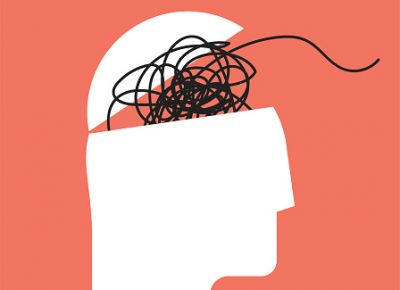
Let’s look at adjusting to life with ADHD. Overcoming ADHD to live a productive life is something every parent wants for their child with an ADHD diagnosis, however adjusting to life with ADHD is typically the answer. Finding lost keys in the refrigerator, running out of gas, spending an hour looking for my phone and once again coming home to discover dinner will not be served because I forgot to turn on the crockpot, are just some of my recent mishaps. All of this in addition to the work and personal responsibilities of the daily grind is stressful and mentally exhausting. No one knows what it’s like behind closed doors because I and many others with ADHD do a such a good of ‘masking’ to fit in with those around us. The downside is we can only hold it in for so long before our so called ‘mess-ups’ become apparent to others.
Adjusting to work and social life with ADHD
 Unfortunately, people on the outside of the ADHD culture are not as forgiving as those of us on the inside. They can be harsh with their feedback, when through no fault of our own, due the wiring of our brains, we don’t meet up to their standards. That is getting the same result but going about it a different way. There is no one way to do something, just as there are many routes to the same destination. Somehow in our society we are expected to conform to a set of unwritten rules that leaves those with ADHD open to judgement.
However unconventional our methods may be, they work for us. Many of my adult clients say the self-hate is torturous, ruminating thoughts telling them they’re lazy, incompetent, self-centered, plus some other things that can’t be put in writing!
Well-meaning ‘neurotypical’ friends tell them they are scattered, need to meditate, focus, use strategies, and to just do one thing at a time, as if they hadn’t tried those things already! There is a false belief strategies are remedies to eliminate the symptoms of ADHD or change the wiring of the brain. Although I’m successful, have higher degrees in education, am well-spoken and have received accolades for my work, I still feel like I’m an imposter! I quite frequently need to remind myself I don’t have a character defect. I have a legitimate diagnosed disorder, just like one has heart disease or diabetes.
How I am adjusting to life with ADHD
 So how did I turn lemons into lemonade? I did my research and found a better way. I now share my success with others and provide students of all ages with help and programs that do work. No, they are not just strategies, as mentioned above. Although strategies help, they are not good enough!
All of the programs I provide are based on the latest scientific research and I have personally completed them myself. Not only have I experienced relief, I have been able to not just survive, but to thrive. I have exceeded my goals and am constantly creating new ones. But, the greatest reward of all is seeing the success of others!
Take my Brain Quiz and receive a complimentary 30- minute session to go over your results. You or your child too can experience success, just like the hundreds of students I help over the past 20 years!
Linda Karanzalis, MS
Linda Karanzalis, MS, is a former special education classroom teacher with over 25 years of experience in the areas of learning disabilities, ADHD, social-emotional learning, social skills training, and behavior management